
SightLogix, a leader in AI-powered thermal security for critical infrastructure environments, today announced the launch of the next platform for its flagship smart thermal AI camera, SightSensor, to meet current and future demands of critical infrastructure security in the most challenging perimeter environments. The new platform combines state-of-the-art hardware, enhanced edge AI performance, and advanced diagnostics to power next-gen thermal imaging and redefine proactive threat detection and response at the perimeter.
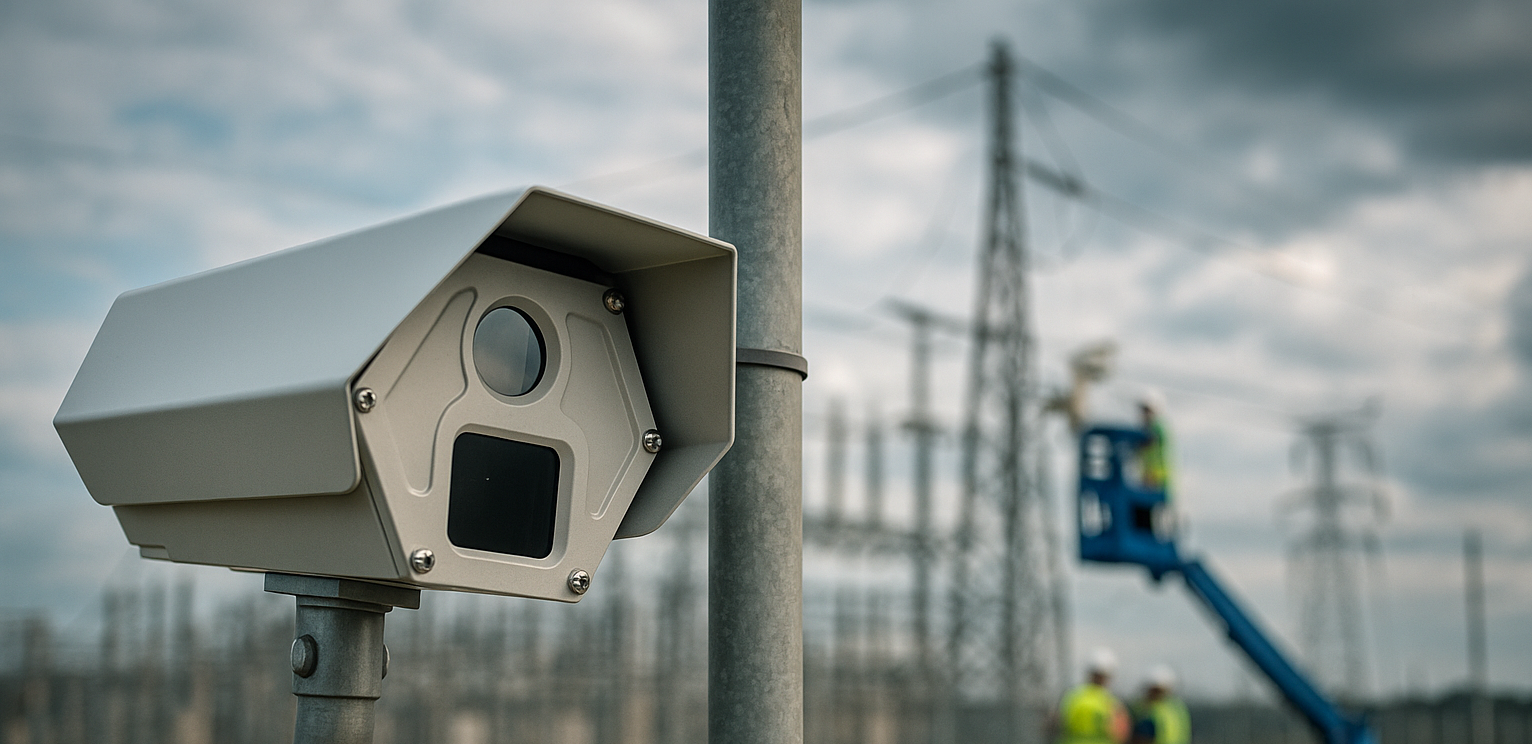 Additionally, this new platform debuts an expanded, purpose-built, thermal video AI library that delivers greater classification accuracy for false alarm reduction. Based on the increased processing power and trained on more than 2 million real-world, non-synthetic thermal images, the new platform enables the library to grow and continually improve performance, providing long-term value for customers.
“The new SightSensor platform sets the foundation for where perimeter security is headed. Backed by 98% detection accuracy at distance and proven reliability, SightLogix continues to help security leaders protect critical infrastructure with confidence and measurable ROI,” stated Jim Hahn, CEO and Chairman of SightLogix. “By combining more power, intelligence and resilience in a single device, we are delivering improved performance and redefining what’s possible at the edge with less bandwidth, lower latency, and no dependence on the cloud or servers.”
These advancements strengthen SightLogix’s position as a leading and trusted provider of reliable perimeter protection for vast, high-risk outdoor environments, helping organizations lower costs by covering more area with fewer cameras, fewer false alarms, and faster response times.
Key Features Include:
The new platform is available to order for all SightSensor thermal perimeter cameras. For more information about ordering and pricing options visit www.sightlogix.com
 Michael McNamara has joined DMP as the regional sales manager for Florida. He will provide ongoing service and support to DMP dealers throughout the state.
“I have worked with manufacturer reps over the years and have enjoyed the value and support they bring and now hope to bring my experience from the integrator side to the role,” said McNamara. “In my previous roles, I have had the opportunity to both install and service DMP products as well as propose and sell DMP.”
McNamara has over 35 years of experience in the security industry, including managing national accounts in the financial, education, and retail verticals, as well as state and local government. In his previous roles at JCI, he managed the customer experience program for North America and served as a regional sales manager for the South Atlantic.
Contact Information:
Michael McNamara | Regional Sales Manager, Florida
Direct Cell: 417-422-6667
Email: MMcNamara@DMP.com
A new research report, filed by the Security Industry Association (SIA) with the Federal Communications Commission (FCC), details the risks of a proposal under consideration by the FCC that would restructure portions of the Lower 900 MHz band, which is used by billions of unlicensed, low-power devices.
NextNav has petitioned the FCC to reconfigure the frequencies between 902-928 MHz (the Lower 900 MHz Band) and grant the company a nationwide license for 15 megahertz of spectrum so it can establish a 5G terrestrial-based position, navigation and timing network—radically altering the spectrum. The new research conducted by engineering consulting firm Pericle Communications Company, commissioned by SIA and with additional support from the Alarm Industry Communications Committee, the Electronic Security Association (ESA) and The Monitoring Association (TMA), shows that the proposal would severely limit the range and compromise the effectiveness of devices operating in this spectrum, including:
Lower 900 MHz band is heavily used by “Part 15” security and life safety systems, smart home technology, consumer and business electronics and more devices that would face harmful interference from NextNav’s high-power usage in the band.
In addition to these public safety and security uses, other critical systems that could be disrupted include equipment that first responders use during emergencies, municipal infrastructure, railroad operations and safety, highway infrastructure, retail and supply chain operations and agriculture solutions.
“Our research modeling and simulations show that NextNav’s proposed system would render an enormous number of public safety and mission-critical devices—along with countless other devices that rely upon the Lower 900 MHz Band—inoperable,” said Michael McGinley, senior systems engineer at Pericle. “This amount of interference would simply be unacceptable due to the severe disruption it would have on the user experience and radio performance. The interference would be a direct result of the incompatibilities between NextNav’s high-power cellular network and the low-power, radio frequency devices currently operating in the band.”
“NextNav’s proposal would be detrimental to the operation of devices that are critical for our life safety and security, first responders and the public,” said SIA CEO Don Erickson. “This proposal would have devastating effects in many U.S. households, and make everyday life less safe, less convenient and more costly.”
“Since the proposal to the FCC was filed more than 16 months ago, the Commission has been flooded with concerns from affected companies and trade groups about the potential consequences,” said TMA President Steve Butkovich.
“The Pericle study confirms the negative impact to consumers and to public safety that would result if the petition were to be granted,” said ESA Executive Director and CEO Merlin Guilbeau.
As other concerned parties have noted, there are a variety of GPS alternatives that do not require severely disrupting existing spectrum users. While a backup GPS system is needed, these other solutions would cause much less disruption, and implementing NextNav’s proposal would present tradeoffs that are not worth the harmful impact on our nation’s safety and security and major inconveniences the proposal would cause.
The full research report can be found here. More information and resources related to the Lower 900 MHz band can be found here.